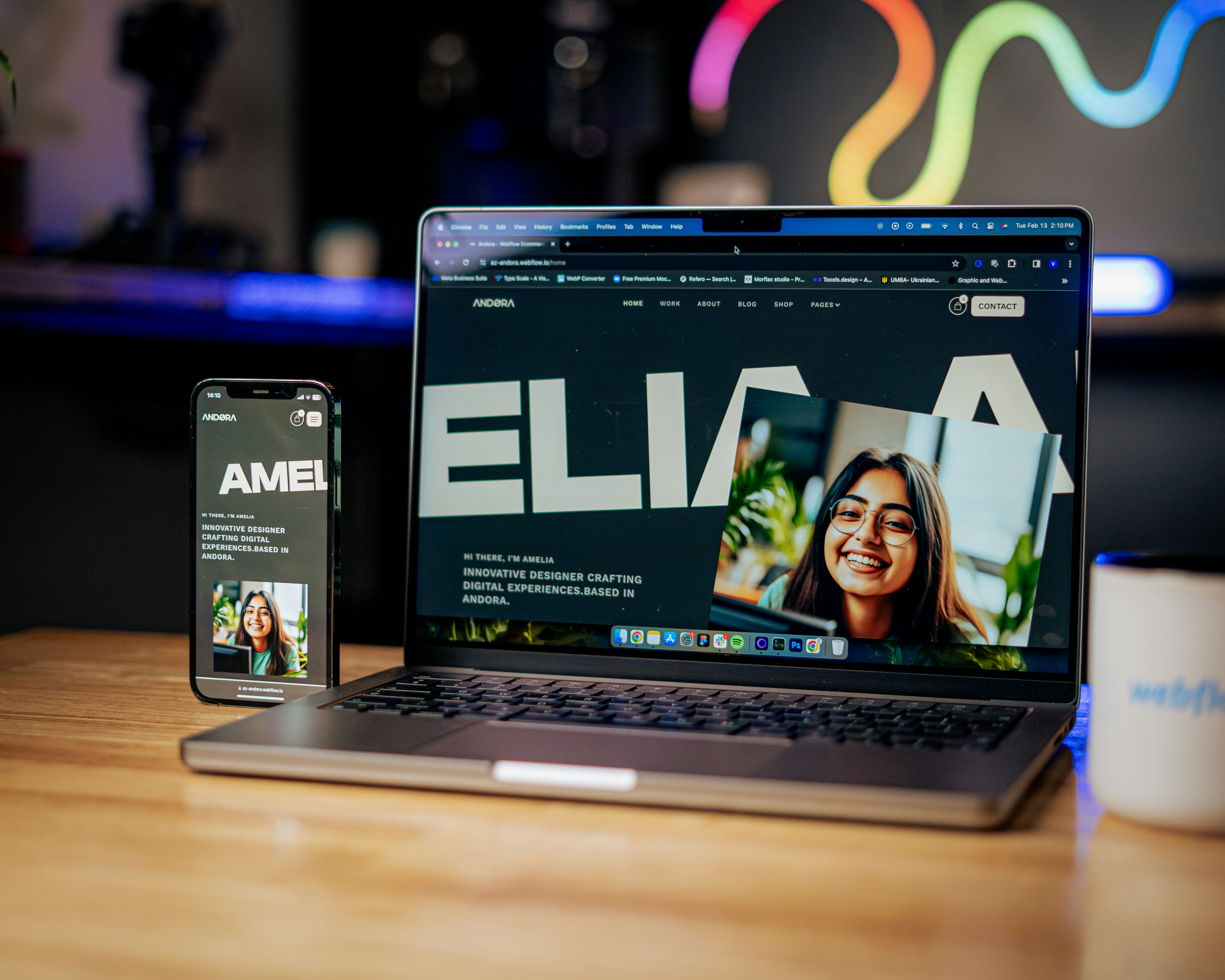

A well-designed website isn't just about aesthetics, it's a proven business tool that can double conversion rates, build instant credibility, and transform how your business operates and generates revenue 24/7.
Your website makes its first impression in 50 milliseconds. That's faster than the blink of an eye, and in that split second, potential customers are already forming opinions about your business's credibility, professionalism, and whether they should stick around.
Research from WPBeginner shows that 75% of people form their judgment about a website based entirely on its design. Not your product quality. Not your years of experience. Your design.
For businesses still treating their website as an afterthought, a digital brochure that "just needs to exist," this creates a problem. Because while you're focused on operations, marketing, and customer service, your website is quietly repelling customers before they ever get a chance to see what you actually offer.
The good news? A strategically designed website doesn't just prevent customers from leaving. It actively transforms how your business operates, grows, and generates revenue. This isn't about making things "look pretty." It's about building a 24/7 sales tool that works harder than any single employee ever could.
The Real Cost of Bad Design
Let's start with what poor website design actually costs you.
When someone lands on your site and immediately sees outdated visuals, confusing navigation, or sluggish load times, they don't give you a second chance. Industry data reveals that 57% of internet users say they won't recommend a business with a poorly designed mobile website. They won't contact you. They won't browse your services. They'll leave, and they'll probably tell others to avoid you too.
The damage goes deeper than lost visitors. Search engines like Google factor design quality into their rankings. Sites that load slowly, aren't mobile optimized, or create frustrating user experiences get buried in search results. Studies by VisualBest demonstrate that every one second delay in page load time results in a 7% decrease in conversions. If your site takes five seconds to load instead of two, you're potentially losing 21% of your conversions before anyone even sees your content.
Bad design doesn't just cost you new customers. It erodes trust with existing ones. If your site looks like it hasn't been updated since 2015, people assume your business practices are equally outdated.
How Design Directly Impacts Your Bottom Line
The financial impact of quality web design isn't speculative. It's measurable, and the numbers are striking.
Analysis from Loopex Digital found that a well executed user interface design can boost website conversion rates by 200%. That's not a marginal improvement. That's potentially tripling your customer acquisitions from the same traffic you're already getting. When you consider that the US web design industry reached $43.5 billion in 2024, it becomes clear why businesses are investing heavily in this area. They're seeing returns.
The conversion equation is simple: traffic × conversion rate = customers. Most businesses obsess over getting more traffic through ads and SEO. But if your conversion rate is 2% when it could be 4% with better design, you're working twice as hard for the same results.
Consider what happens when someone searches for a solution to their problem and finds your site. Good design does three things instantly:
Guides them naturally toward the information they need
Builds confidence in your expertise through professional presentation
Makes taking action feel easy and obvious
Compare that to a competitor with a confusing layout, hidden contact information, and unclear value propositions. Even if their actual service is identical to yours, they're losing customers before the comparison even happens.
Mobile Isn't Optional Anymore
Current web traffic data shows that mobile devices generated 64.35% of all web traffic as of July 2025. Nearly two thirds of your potential customers are viewing your site on a phone or tablet, not a desktop computer.
If your website isn't designed with mobile users as the priority, you're actively driving people away. Research indicates that 61% of internet users have a higher opinion of companies with mobile friendly website design.
Google recognizes this shift too. Their algorithm now uses mobile first indexing, meaning they primarily evaluate your mobile site when determining search rankings. A beautiful desktop site with a clunky mobile experience won't rank well, period.
The practical implications matter. When someone searches "plumber near me" on their phone at 9 PM because they have a leak, they need:
Clear contact information immediately visible
Easy to tap phone numbers
Straightforward service descriptions
Fast loading pages
If they have to pinch zoom to read text or struggle to find your phone number because it's buried in a desktop oriented menu, they're calling your competitor instead.
Mobile optimization isn't about shrinking your desktop site to fit a smaller screen. It's about rethinking the entire user experience for people on the go, with different needs, shorter attention spans, and a lower tolerance for friction.
The Psychology Behind Design Decisions
Great web design taps into fundamental psychological principles about how people process information and make decisions.
Visual hierarchy guides attention naturally. When someone lands on your homepage, their eyes follow a predictable pattern. A well designed site places your key message, value proposition, and primary call to action in these high attention zones. Poor design scatters information randomly, forcing visitors to hunt for what they need.
Color psychology plays a role too. User preference studies show that 46% of website users prefer blue, while only 23% prefer yellow in website design. Blue tends to signal trust and professionalism, ideal for financial services or healthcare. Bright, energetic colors work better for creative industries or youth focused brands.
White space gives visitors' eyes room to rest and makes your content easier to process. Dense, cluttered layouts overwhelm people and increase cognitive load, making them more likely to leave.
These aren't superficial aesthetic choices. They're strategic decisions that either reduce friction in the user experience or create it. Every unnecessary click, confusing label, or unclear next step is a potential exit point where you lose a customer.
Speed Equals Revenue
Page speed might be the single most important technical factor affecting your business results.
Performance optimization research demonstrates that decreasing mobile site load times by just one tenth of a second resulted in major increases in conversion rates across multiple industries. We're talking about fractions of a second making a substantial difference in your bottom line.
Fast sites don't just convert better. They rank higher. Google has explicitly stated that page speed is a ranking factor, particularly for mobile searches. Slower sites get pushed down in results, reducing your organic visibility and forcing you to spend more on ads to compensate.
Think about your own online behavior. When was the last time you patiently waited for a slow website to load? You probably left within a few seconds and found a faster alternative. Your customers behave exactly the same way.
Modern platforms like Framer and Shopify are built with speed optimization in mind, but only if they're implemented correctly. The technical aspects of speed optimization include:
Image compression and proper formatting
Code minification
Content delivery networks
Lazy loading for images and videos
Efficient hosting infrastructure
The real question is whether your current site was built with these considerations in mind or cobbled together with speed as an afterthought.
Building Trust at Scale
Consumer research reveals that 50% of consumers believe that website design is crucial to a business's overall brand. Your website is often the first substantial interaction someone has with your brand, and it either reinforces trust or raises red flags.
Professional design signals that you take your business seriously and have the resources to invest in quality. It suggests attention to detail, which people extrapolate to your products or services. If you can't be bothered to maintain a current, functional website, why would they trust you with their money?
This is particularly critical for businesses in competitive markets or those requiring high trust decisions. If you're asking someone to spend thousands of dollars on your services, or trust you with sensitive information, your website needs to match that level of professionalism.
Trust indicators that should be integrated naturally include:
Clear contact information with multiple ways to reach you
Professional photography and branded visuals
Detailed service or product descriptions
Client testimonials and case studies
Security badges and certifications
About page with team information
Privacy policy and terms of service
A well designed site integrates these elements naturally rather than feeling like a checklist of trust signals awkwardly crammed onto a page.
The SEO and Design Connection
Search engine optimization and web design aren't separate concerns. They're deeply interconnected.
Google's algorithm evaluates hundreds of factors when determining rankings, and many of them are directly tied to design quality. Site structure and navigation affect how easily search engines can crawl and index your content. Mobile responsiveness is a confirmed ranking factor. Page speed influences rankings. User engagement metrics like bounce rate and time on site signal content quality and relevance.
When someone lands on your site from a search result and immediately bounces back because of poor design, Google notices. Consistently high bounce rates and short dwell times tell search engines that your site doesn't satisfy user intent, pushing you lower in results.
Conversely, sites that keep visitors engaged create a positive feedback loop:
Better design leads to better user metrics
Better user metrics lead to better rankings
Better rankings lead to more traffic
More traffic creates more opportunities for conversion
The technical architecture matters too. Clean HTML, proper heading structures, strategic internal linking, and optimized images all contribute to both user experience and search performance. A site built without these considerations is fighting an uphill battle for visibility.
Real Business Outcomes from Strategic Design
Let's move beyond statistics to actual business transformations.
A well designed website becomes a lead generation machine that works around the clock. Unlike sales teams with limited hours or trade show booths that only reach people who attend, your website is constantly available to qualify prospects, answer common questions, and guide potential customers toward contact.
For service based businesses, this means fewer phone calls asking for basic information and more calls from qualified prospects ready to discuss specific needs.
For e-commerce, it means higher cart values, lower abandonment rates, and more repeat purchases.
For local businesses, it means capturing customers searching for "near me" queries who need immediate solutions.
The scalability matters enormously. A single salesperson can only handle so many conversations per day. Your website can handle thousands of simultaneous visitors, each receiving a consistent, optimized experience designed to move them toward conversion.
This doesn't replace human interaction. It enhances it by filtering and preparing leads so your team spends time on high value conversations rather than answering repetitive questions.
The data captured through your website provides invaluable insights for refining your overall business strategy. You learn what messaging resonates, what concerns come up most frequently, and where friction exists in your sales process.
The Redesign ROI Question
If your current website isn't delivering results, the question becomes: what's the return on investment for a professional redesign?
The costs vary widely depending on complexity, but generally range from a few thousand dollars for small business sites to $50,000+ for large, complex platforms. Industry reports indicate that more than half of businesses reported sales growth after adopting responsive website design.
Calculate your potential ROI by looking at current conversion rates and projected improvement. If you're getting 1,000 visitors per month with a 2% conversion rate, that's 20 customers. If a redesign improves conversion to 4%, you're getting 40 customers from the same traffic. That's doubling your customer acquisition without increasing marketing spend.
For businesses with higher customer lifetime values, even small percentage improvements in conversion create substantial returns. A law firm that lands one additional client per month due to better design could easily recoup a $30,000 investment within the first year.
The cost of inaction is also real. Every month you operate with a suboptimal website is a month of lost revenue and missed opportunities. The longer you wait, the further behind you fall as competitors upgrade their digital presence.
Design as Competitive Advantage
In crowded markets where products and services are relatively similar, customer experience becomes the primary differentiator. Your website is a major component of that experience.
When prospects are comparing multiple vendors, the one with the clearest value proposition, easiest navigation, and most professional presentation has a significant advantage, even if their actual offerings are identical to competitors.
This is particularly true for local businesses competing in the same geographic area. If five contractors are listed in local search results, the one with the modern, mobile friendly site that clearly explains services and makes contact easy will capture a disproportionate share of inquiries.
Good design removes objections and friction. It anticipates questions and addresses concerns before they become deal breakers. It makes choosing you feel like the obvious, low risk decision.
What "Good Design" Actually Means
Good design isn't about following the latest trends or winning awards. It's about achieving business objectives through user centered experiences.
A good website should:
Load quickly across all devices (under 2.5 seconds)
Present information in a logical hierarchy
Work flawlessly on mobile with readable text and tap friendly buttons
Have clear calls to action that guide visitors toward the next step
Be accessible to people with disabilities
Reflect your brand consistently with appropriate colors, typography, and imagery
Include strategic content that addresses customer questions and concerns
Most importantly, good design is strategic. Every element serves a purpose in moving visitors toward conversion, whether that's making a purchase, filling out a contact form, or calling your business.
Modern platforms like Framer offer the flexibility to create custom, high performance websites without the limitations of traditional builders. Combined with e-commerce solutions like Shopify for online stores, these tools enable businesses to create professional, conversion optimized sites that actually drive results.
Taking Action
If you're reading this and realizing your website isn't delivering results, the path forward depends on your specific situation.
You need a complete redesign if:
Your site isn't mobile responsive
Load times exceed 3 seconds
You haven't updated the design in 3+ years
Your bounce rate is above 70%
Visitors consistently tell you they can't find what they need
Strategic improvements might be sufficient if:
Your site is functional but underperforming
You need better calls to action
Your content needs reorganization
Mobile experience needs optimization
Page speed could be faster
The key is approaching this strategically rather than aesthetically. The question isn't "Does this look nice?" but rather "Does this help us achieve our business goals?" Great design is invisible in the sense that it so smoothly guides users toward conversion that they don't notice the design itself. They just know the experience felt easy and trustworthy.
Your website is often the first employee a potential customer meets. It's representing your business to thousands of people you'll never interact with directly. The question is whether that employee is helping your business grow or quietly turning away opportunities while you focus on everything else.
The web design industry's growth to $43.5 billion in the US alone isn't happening because businesses enjoy spending money on websites. It's happening because the returns justify the investment, and companies that recognize this are outpacing those that don't.

Let’s keep in touch.
Discover more about web design & branding. Follow us on LinkedIn and Instagram.

